In the late nineties Maison Martin Margiela took the model out of the fashion show. Vogue's review of the Fall 1998 collection, written by Laird Borrelli-Persson in March 1998, puts the house position in one line: "His focus was on garments, not the women on which they were shown." For two consecutive seasons the house made do without live models.
Spring came first. Men in white lab coats presented the Spring 1998 collection on hangers, the way stock is shown at an auction, a detail recorded in SSENSE's guide to the house. The message was the medium. These are objects, not personalities.
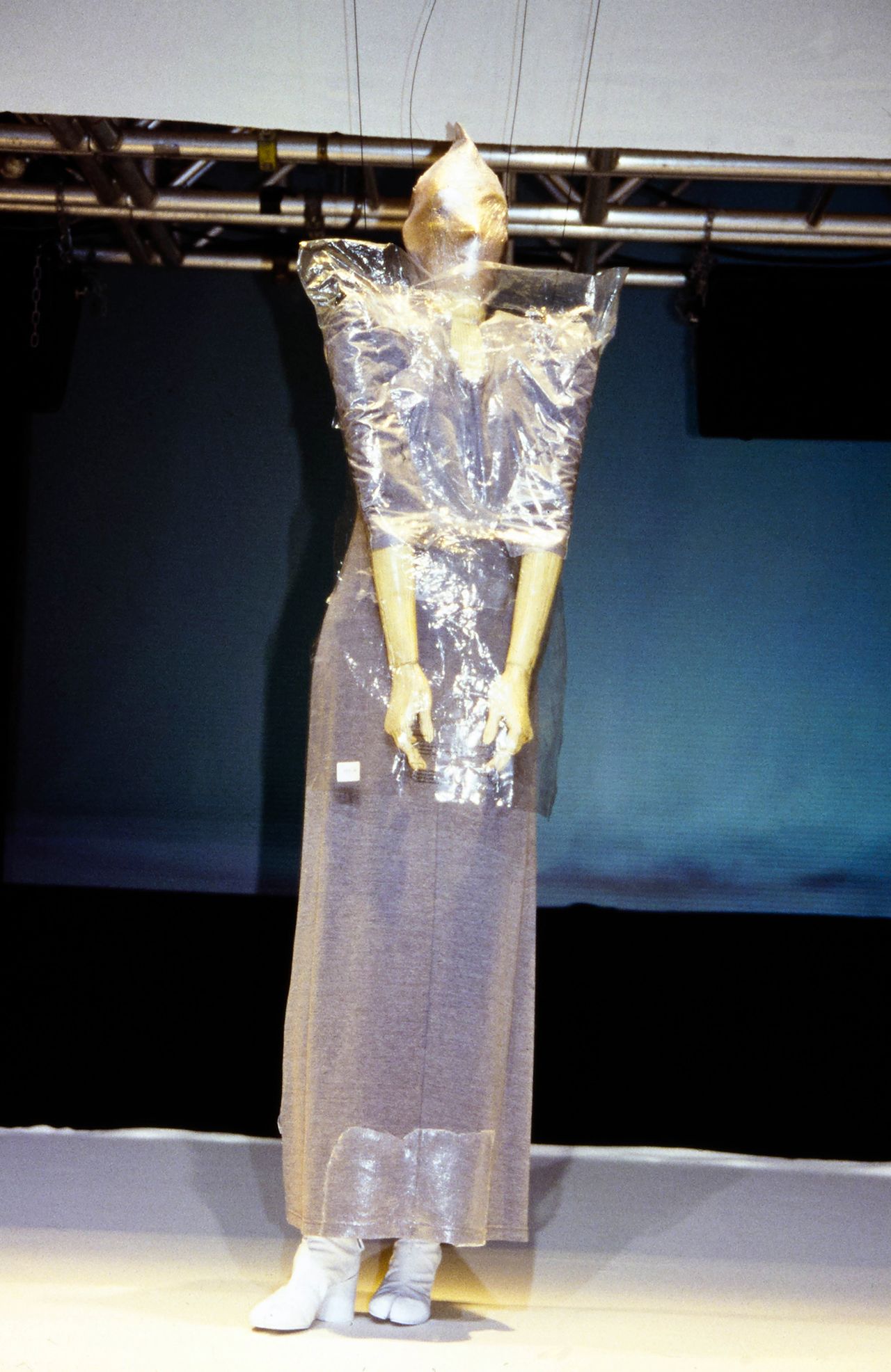
For autumn winter 1998 the house went further. Stylist Jane How built marionettes, and the marionettes wore the clothes. Vogue again: "for Fall '98, marionettes created by stylist Jane How took the stage." A show where nothing walks.
The book is the record
Then the house did the quiet part, the part collectors still chase. It published the collection as a photobook. The bibliographic record lists it plainly: photographs of the autumn winter 1998 collection by Mark Borthwick, published by Maison Martin Margiela in Antwerp in 1998, first edition, 16 by 24 centimeters, ISBN 2-9512460-0-5. It is out of print, and it has been for most of its life.
Read that decision slowly. A season presented with puppets takes its permanent form as a book of pictures. Not a campaign, not a film. When the show refuses the model, the photograph is what survives, and the house said so itself, in print, in the year of the show.
Borthwick was the right pair of eyes for it. In his own account he worked in Paris through the nineties with designers "explicitly shying away from photographic documentation" and from personality, celebrity, and perfection of any kind. He photographed on a 35 millimeter Leica, a gift from Maria Cornejo, and printed at night in a darkroom rigged in his apartment. He was interested in "the moment before a trend took shape," which is a near definition of what the AW98 season was.
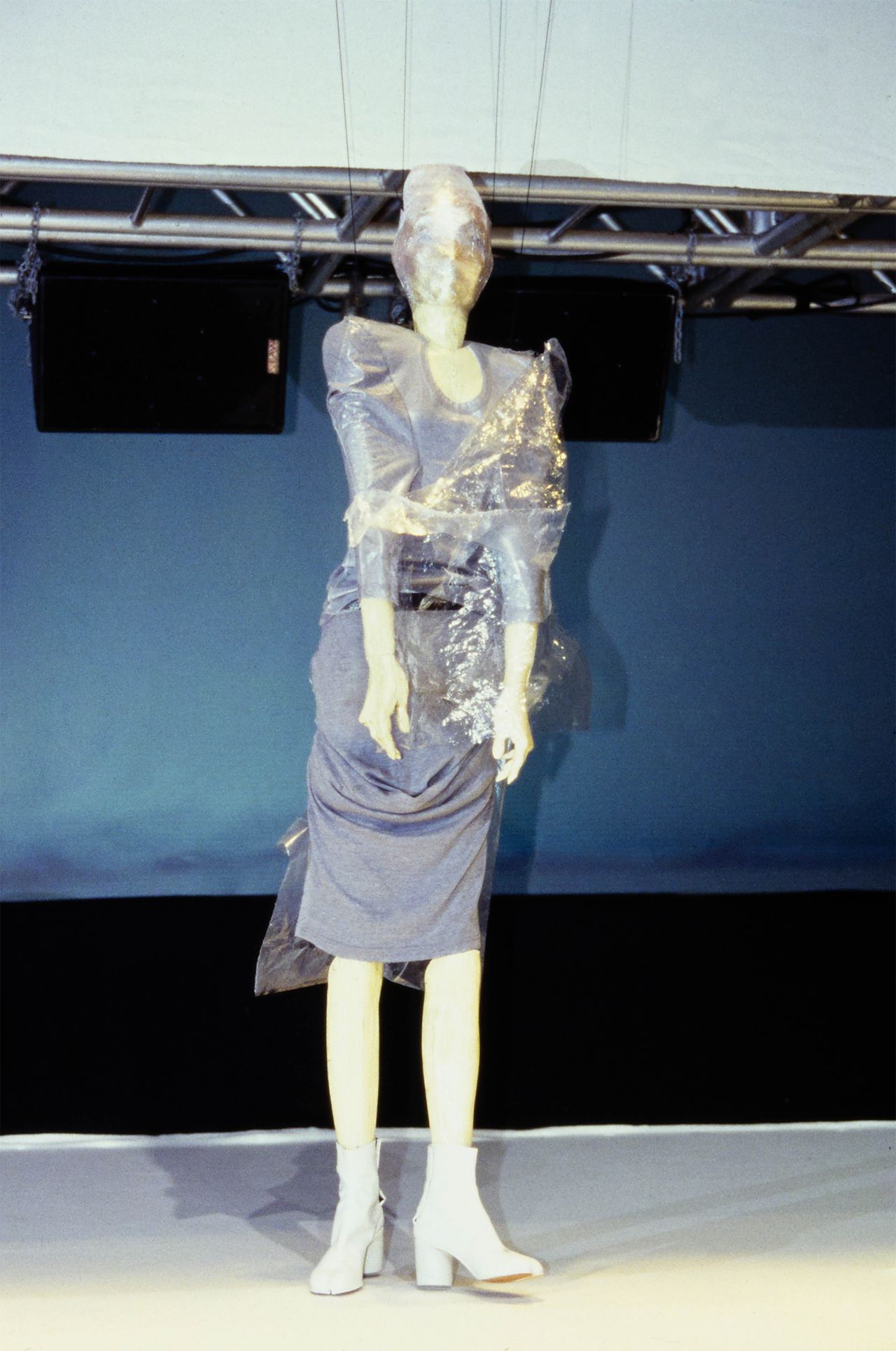
Look two from the autumn winter 1998 collection. Photograph: Vogue Runway archive.
Why a hunter cares
Seasons like this are why archive culture treats print as the strongest provenance. The book is not merchandise adjacent to the collection. For AW98 it is the collection's own record, made by the house, dated to the show. Photobooks from the Margiela era trade like grail garments: quietly, almost never seen whole. When one surfaces, the condition of the spine is the conversation.
The plainer lesson is about the clothes. A house that removes the model is pointing at the garment the whole time. Construction, cut, the four white stitches in place of a logo, the split toe that dates to the first collections. Those signals are still the fastest way to read Margiela in a rack, because the house never buried them under a front row.
The pieces you can hunt
A search for Margiela on Elusive returns 844 pieces today, main line and MM6 together. Some of what is live now:
- Tabi City Mary-Jane shoes in vineyard wine
- Tabi County buckle ankle boots
- Tabi Daily mules
- MM6 x Salomon XT sneakers
Search "margiela" on Elusive. The pictures were the show once. The pieces are the hunt now.